
What It Takes to Be Great in Salsa (Hint: Not Ethnicity)
One of the most harmful myths in salsa is this: "Some people are naturally great, the rest are not."
That belief kills progress before practice even begins.
Reality check
Strong dancers are made through repetition, correction, and time. Yes, some people learn faster at first. But long-term skill comes from consistency, not identity labels.
Being Latino does not automatically make you a great salsa dancer. Being committed does.
What actually drives growth
- deliberate practice
- useful feedback
- persistence through frustrating plateaus
- willingness to rebuild fundamentals
This applies to dance the same way it applies to music, sports, or business.
If you keep showing up and training with intention, you improve. If you wait for "talent" to rescue you, you stay stuck.
Greatness in salsa is not a gift card. It is a long-term payment plan.
Why the "natural talent" myth is dangerous
When dancers believe greatness is genetic, they stop taking responsibility for process.
Typical pattern:
- Beginner compares themselves to advanced dancers.
- Beginner assumes "they have natural gift, I don't."
- Beginner avoids consistent training.
- Beginner confirms their own belief by quitting early.
This is not a talent problem. It is a training psychology problem.
Most respected dancers you admire went through years of awkward basics, missed timing, social anxiety, and repeated correction.
The truth about being Latino and salsa
Cultural exposure can help with musical familiarity. It does not automatically create technical dance skill.
Being born in a culture where salsa music is present might mean:
- earlier listening habits,
- more comfort with rhythm patterns,
- more opportunities to see social dancing.
But those advantages are not the same as high-level lead/follow mechanics, timing precision, body control, floorcraft, and musical interpretation under pressure.
Those still require work.
What "hard work" looks like in salsa
Hard work is not random exhaustion. It is targeted repetition.
Examples:
- drilling basic timing until it is stable under fatigue,
- correcting posture and frame with intention,
- practicing turn mechanics at slow speed,
- studying music structure, not just counts,
- and social dancing often enough to adapt with real partners.
Hard work in salsa is often boring before it becomes beautiful.
Plateaus are not proof you are bad
Every dancer hits plateaus.
Signs of a plateau:
- progress feels invisible,
- old mistakes return,
- confidence drops after rough socials.
What to do:
- Narrow focus to one technical priority.
- Film practice and compare weekly, not daily.
- Get one trusted correction from instructor/mentor.
- Keep social reps even when ego is bruised.
Plateaus usually break when training gets more specific.
Practical blueprint for dancers who want to level up
If your goal is "become a clearly better dancer in six months," use this model:
Weekly structure
- 1-2 technical classes
- 1 focused home drill block (30-45 min)
- 1-2 socials for adaptation
- 1 short music listening session (phrasing and instruments)
Monthly structure
- choose one theme: timing, frame, turns, or musicality
- measure one metric: fewer off-time basics, cleaner turns, better partner feedback
- review one social video to spot recurring issues
This creates a loop of instruction, application, and correction.
Two quotes that still hold up
The original post referenced two ideas worth repeating:
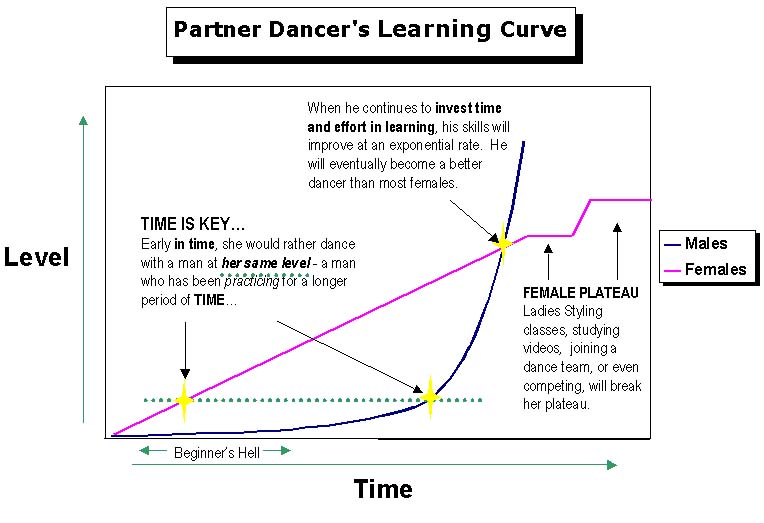
- "When you stop practicing, someone else is practicing."
- "If you practice later, you only get better later."
Both are reminders that salsa growth compounds quietly. Most breakthroughs happen after many unglamorous sessions.
How to stay motivated when progress feels slow
Use smaller wins:
- one cleaner cross-body lead,
- one song with stable timing,
- one social where you recover calmly from mistakes.
Small wins protect momentum. Momentum protects consistency. Consistency creates skill.
What great dancers actually have in common
Across scenes and styles, top social dancers usually share:
- disciplined fundamentals,
- fast error recovery,
- strong partner awareness,
- and humility toward continuous learning.
These are trainable attributes. None require a specific ethnicity.
Final perspective
Stop asking, "Am I naturally gifted for salsa?"
Start asking:
- "Did I train with intention this week?"
- "Did I apply corrections socially?"
- "Did I improve one useful thing?"
If the answer is yes, you are already on the same path every great dancer walked.
One more thing: consistency beats identity stories
Many dancers lose years to identity narratives:
- "I started too late."
- "I am not from a salsa culture."
- "I don't have natural rhythm."
Those stories feel true in the moment but collapse under consistent practice. If you show up weekly, seek correction, and apply feedback socially, your floor quality improves. Not maybe. Predictably.
The most reliable formula is still simple:
- strong fundamentals,
- disciplined reps,
- patient mindset,
- long horizon.
That formula is available to anyone willing to train.

Talent can spark interest, but disciplined repetition is what builds great dancers.
Hard work is still the most democratic path in salsa: available to anyone willing to use it consistently.
Consistency remains the deciding factor.