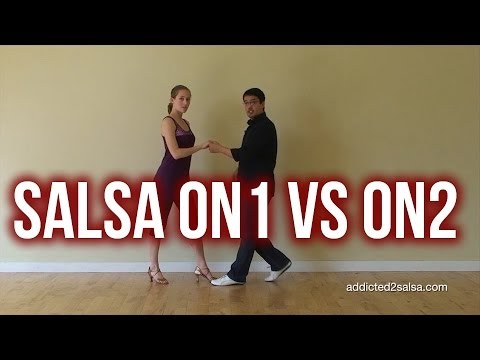
On2 Salsa Timing Explained: Why Execution Feels Different from On1
One of the most common debates in salsa is also one of the most misunderstood: if On1 and On2 use the same basic steps, why do they feel so different?
The short answer is execution.
The footwork map is similar, but where the break steps land, how momentum is managed, and how pauses sit against the music create a very different body experience.
This post is a practical breakdown for dancers who want clarity, not scene politics.
First principle: same structure, different feel
You can think of On1 and On2 as two timing interpretations built on the same movement vocabulary.
So yes, technically related. But in practice, the body mechanics and musical sensation can diverge a lot.
That is why dancers who switch timing often say, "I knew the steps, but everything felt new."
Why many dancers connect On2 with clave awareness
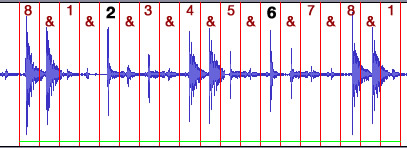
In many salsa songs, dancers and instructors hear On2 as aligning naturally with phrasing and percussion language, especially when focusing on conga and clave relationships.
This does not mean On1 is "wrong." It means On2 often makes certain musical accents easier to feel and express for dancers who train into that timing deeply.
If you want to test this yourself, do not argue theory first. Put on a song with clear percussion and dance both timings for one full track each. Your body will tell you more than a forum thread.
The big execution difference dancers feel
A major perceived difference is how recovery time is distributed, especially around turns.
Many followers describe On2 turns as giving cleaner recovery moments in common social patterns. That perception often comes from where spins resolve relative to in-place counts and pauses.
Again, this is not a magic trick. It is timing geometry.
Center balance and movement quality
Another reason On2 can feel smoother for many dancers is center management.
When timing and weight transfers are organized in a way that keeps momentum more centered, the dance may look less "bouncy" and more gliding. That can improve:
- spin consistency,
- prep control,
- and partner comfort.
But this only happens with good technique. Bad mechanics on On2 still look rough.
Common transition mistake when learning On2
A frequent error is memorizing counts without changing body intention.
Dancers switch numbers in their head but keep On1-style force and prep timing. Result: everything feels late, heavy, or confusing.
A better transition approach:
- Slow down and re-map weight transfer.
- Practice basics with conga/campana focus.
- Drill right turns and cross-body leads before advanced patterns.
- Train exits from spins with calm posture.
- Add complexity only after timing feels natural.
"Why should I dance On2?" and "Why might I stay On1?"
Both are valid questions.
Reasons some dancers add On2
- Better alignment with the musical feel they prefer.
- Smoother sensation in partnerwork and turns.
- More versatility in scenes where On2 is common.
- Better communication with partners who strongly prefer On2.
Reasons some dancers prioritize On1
- Local scene is overwhelmingly On1.
- Their goals are social frequency and ease of access.
- They currently progress faster by deepening one timing first.
There is no universal mandate. There is only what serves your dance goals.
The practical middle ground
If you are serious about social dancing, learning both timings is usually a good long-term investment.
You do not need to become "50/50 perfect" overnight. But even basic On2 competence expands your adaptability and partner compatibility.
That adaptability is a real social skill, not just a technical badge.
Drill set for dancers moving from On1 to On2
Use this 20-minute session three times per week:
Block A (5 min)
Basic step only, no turns. Count out loud softly. Focus on clean weight transfer.
Block B (5 min)
Cross-body lead variations with minimal styling.
Block C (5 min)
Single right turns for both roles with controlled finishes.
Block D (5 min)
One full song at social speed, prioritizing calm execution over variety.
Track one thing each session: where you lose balance or rush counts. Fix that first.
FAQ: quick answers dancers ask most
Is On2 always smoother than On1?
Not automatically. A well-trained On1 dancer can be very smooth. Timing choice helps, but technique quality decides outcome.
Do I have to switch completely to On2?
No. Many dancers keep both. The practical goal is fluency and partner adaptability, not abandoning one identity.
How long does the transition usually take?
For social dancers practicing consistently, basic comfort can appear in weeks, while true musical confidence often takes months.
The bigger point
Timing discussions can become tribal. They should not.
The goal is not to prove one camp superior. The goal is to become a musical, respectful, adaptable dancer who can make partners feel good and make the music visible.
If On2 gives you that more naturally, train it. If On1 is your base, refine it. If possible, develop both.
Final takeaway
On1 and On2 are closely related structurally, but execution differences make them feel and look distinct in real dancing.
When you understand those differences in terms of weight transfer, recovery, and musical phrasing, timing stops being ideology and starts being craft.
That is where real progress happens.