Interview with Salsa Youth Stars Raymond and Jenalyn: Training, Mindset, and Growth
Watching young dancers get standing ovations is exciting. Understanding how they got there is even more useful, especially for parents searching for serious salsa dance training for kids.
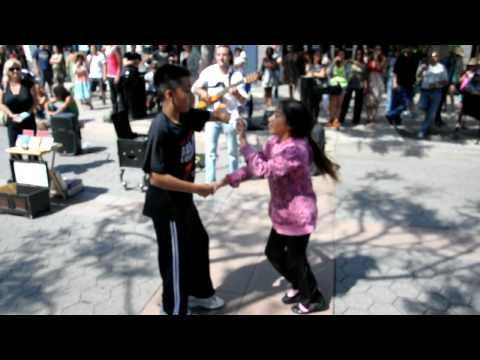
Raymond and Jenalyn became well known in congress circles at a very young age, but their trajectory followed a pattern that coaches and experienced social dancers will recognize:
- strong family support,
- early exposure to multiple dance styles,
- disciplined weekly practice,
- and opportunities to perform in front of real audiences.
This is why their story still matters. It is not a fairytale about instant talent. It is a practical blueprint for youth salsa development.
What made their progress different
One of the strongest details from the original interview is that they were not trained in only one lane. Alongside salsa, they studied other forms of movement and stagecraft. That kind of cross-training is not a side detail. It often explains why younger performers can look so comfortable under pressure.
For example, dancers who do ballet and acro usually develop cleaner lines, stronger feet, and better control through directional changes. Hip hop and breakdancing can sharpen rhythm accents and stage confidence. Drama or theater classes help with projection, facial expression, and staying composed in front of large crowds.
When these pieces come together, salsa technique improves faster because the body already understands balance, body awareness, and performance timing.
Family influence and dance culture at home
Another key piece was their dance environment at home. They grew up around social dancing, saw adults enjoying partner dance, and naturally became curious. That matters for beginners because motivation tends to be stronger when dance feels like part of life, not only a class assignment.
In practical terms, that means:
- Music is already present outside the studio.
- Kids are exposed to timing and rhythm before formal drills.
- Practice happens more consistently because the household values it.
For families asking, "How do we help our children stay interested in salsa?" this is usually the answer: normalize dance as a joyful habit, not only a competition goal.
Why stage reps matter so much for youth salsa
The interview also emphasized repeated performance experience across multiple cities and events. That detail is huge for skill development.
A lot of dancers look excellent in rehearsal and then tighten up on stage. The lights, the crowd noise, the travel fatigue, and the pressure to execute all at once can expose weak fundamentals. Kids who perform regularly learn to manage those variables earlier.
Stage reps teach things that class drills alone do not:
- how to recover after a timing mistake without panic,
- how to maintain frame quality when adrenaline spikes,
- how to communicate with your partner without speaking,
- and how to project confidence even when a sequence feels risky.
If your goal is youth salsa performance quality, you need both studio precision and real audience experience.
Competitions, travel, and mental resilience
The original conversation referenced performances and competitions in places like Los Angeles, Miami, Calgary, Montreal, and Bermuda. Beyond trophies, this kind of travel offers a deeper benefit: dancers must adapt to new floors, different event schedules, and unfamiliar crowds.
That process builds resilience and professionalism.
Young dancers learn to warm up in imperfect conditions, stay focused between long event delays, and still deliver when called. These are the same habits that support long-term growth in social dance, amateur teams, and eventually professional-level work.
It also reinforces humility. At major congresses, you see many styles, many interpretations of salsa music, and many levels of athleticism. Good dancers leave those weekends inspired, not complacent.
Cross-training and musicianship
A standout insight from the interview was how music study supported dance growth. Instrument training and listening skills made counting and phrasing easier.
This is one of the most underused advantages in salsa education. Dancers who actively train their ears can:
- catch phrase transitions sooner,
- recognize breaks and hits with less guesswork,
- and adapt partnerwork choices to the energy of each song.
If you teach youth salsa, add simple rhythm exercises and active listening drills. Even ten focused minutes per session can improve timing quality faster than repeating random combinations.
The hard part no one sees
Most people only see the polished performance clip. They do not see the fatigue, repetition, and correction cycle that happens beforehand.
The interview was clear about this point: the hardest part was usually practice, not the spotlight. Tough rehearsals, technical corrections, and relearning details are normal at every level.
This is an important message for beginners and parents. Progress in salsa is rarely linear. Some weeks feel smooth, others feel frustrating. What matters is consistency. The dancers who improve over years are the ones who keep showing up when sessions feel difficult.
Lessons for parents of young salsa dancers
If you are guiding a child in salsa, these principles from Raymond and Jenalyn's path are still highly relevant:
- Choose coaching that balances discipline with encouragement.
- Support broad movement education, not only pattern memorization.
- Prioritize healthy routines: sleep, hydration, recovery, and school balance.
- Help kids reflect on process goals, not only medals.
- Keep dance joyful so motivation lasts beyond one season.
Parents often ask how to avoid burnout. The best strategy is to celebrate growth markers that are not purely competitive: cleaner timing, calmer stage presence, better partner respect, and stronger musical listening.
Lessons for young dancers
For younger readers who want to become better salsa performers, this interview points to a practical roadmap:
- master fundamentals before chasing flashy tricks,
- train body control and core strength,
- study music intentionally,
- perform often to reduce nerves,
- and stay coachable.
You do not need to peak early. You need to build a foundation that still works five years from now.
Why this interview still matters for salsa SEO and learning value
People searching phrases like "kids salsa dancers," "youth salsa training," "how to improve salsa performance confidence," or "family salsa dance journey" are usually looking for real examples, not generic advice. This interview provides that context.
It shows how youth talent can be developed responsibly through mentorship, cross-training, and long-term consistency. For instructors, parents, and motivated teens, that is far more useful than another "top 5 salsa tips" list.
Final takeaway
Raymond and Jenalyn's story remains one of the clearest reminders that great salsa performance is built, not gifted. Their early success came from preparation, community, and repeated practice in real conditions.
For any young dancer reading this: do not worry about being perfect today. Build your timing, keep your basics clean, train with intention, and stay in love with the music. The rest compounds.
And for parents, coaches, and team directors: protect the joy while you raise the standard. Technical excellence and healthy confidence can grow together when training is consistent, respectful, and rooted in the music.