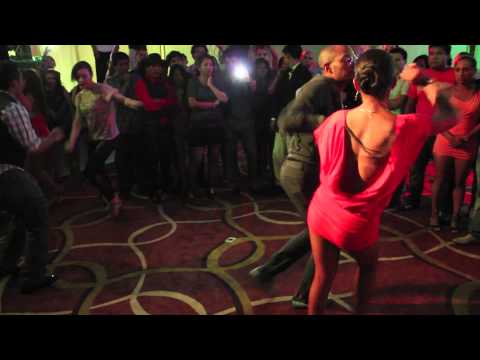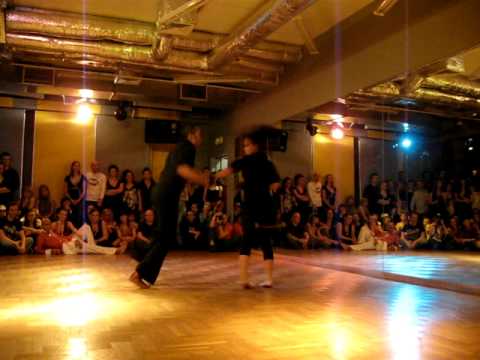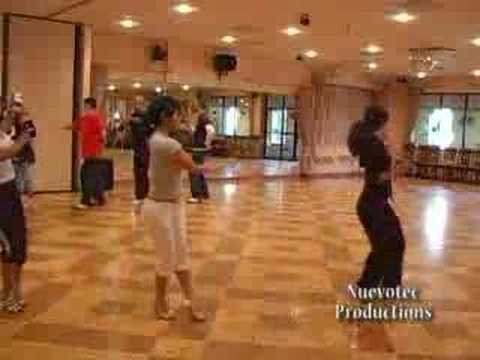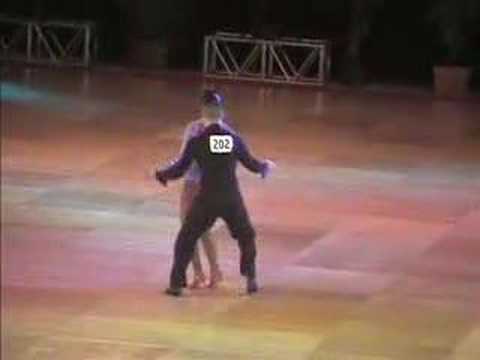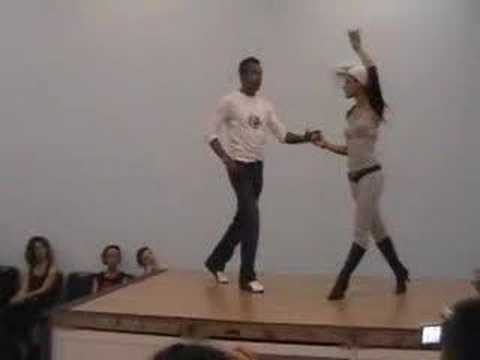
Juan Matos with Yesenia Peralta and Burju: Same Song, Different Styling
When dancers want to understand "style" beyond buzzwords, comparisons like this are perfect.
You get the same lead dancer, similar musical context, and related performance structure, but a different partner. The result is a clear lesson: partnership changes interpretation.
What this comparison teaches
Lead consistency, different texture
Juan Matos maintains his core movement identity, but the visual texture shifts because each partner brings different body language, energy timing, and styling vocabulary.
Partner styling affects overall narrative
Even when technical pathways are similar, the emotional tone can change based on styling choices, extension quality, and movement attack.
"Same choreography" is never exactly the same
Performance is a live interaction, not a static blueprint. Musical decisions are filtered through the partnership in real time.
How to study both clips productively
Use a side-by-side mindset and track:
- timing accents in the same musical phrases,
- transition smoothness between highlights,
- spin preparation and exits,
- frame communication during faster sections,
- and energy arc from intro to finish.
This type of comparison makes you a better viewer, and better viewers become better dancers.
Practical takeaway for social dancers
You do not need stage choreography to use this lesson.
In social dancing, every partner is a new conversation. The best dancers keep their fundamentals stable while adapting expression to the person, the song, and the room.
That adaptability is what people remember.
Final takeaway
These two performances are a reminder that style is relational.
Technique gives structure, but partnership gives personality. Learn from both, and your dancing becomes more complete.