
Salsa Mechanics 101: How Your Brain Learns to Lead and Follow
If you have ever thought, "Why does salsa feel like mental overload in the beginning?" you are not imagining it.
Early learning requires your brain to manage multiple tasks at the same time: timing, direction, partner connection, foot placement, hand signals, floor awareness, and what comes next. That is a heavy processing load.

Why leading often feels harder at first
Following and leading can both be difficult, but they challenge attention in different ways.
A new leader usually has to:
- maintain personal timing,
- plan upcoming movement,
- communicate signals clearly,
- and adapt to partner response in real time.
That planning burden is why many new leaders feel mentally exhausted after only a few songs.
The useful concept: chunking
One of the biggest breakthroughs in dance learning happens when your brain starts "chunking" steps into single units.
At first, a cross-body lead feels like six separate instructions. Later, it becomes one motor phrase your body can execute with less conscious effort.
When this happens, mental bandwidth opens up for:
- musicality,
- styling,
- and smoother partner communication.
Why repetition works (when done correctly)
Mindless repetition is less useful than targeted repetition.
Use this method:
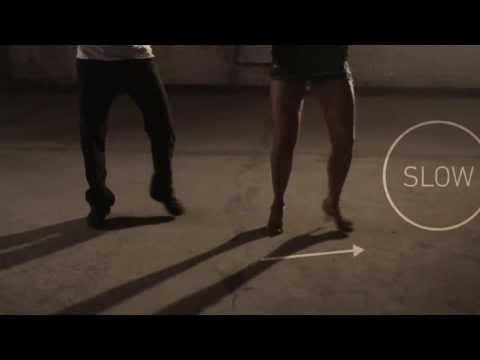
- Do 10 slow, clean reps.
- Do 10 medium reps with timing focus.
- Do 10 reps to music.
- Do 10 reps with a partner.
- Do 10 reps with social-floor variability.
That progression helps your nervous system move from "thinking every piece" to "executing a coordinated pattern."
Practical takeaway for faster progress
- Keep combinations simple until timing is stable.
- Record yourself occasionally to catch hidden habits.
- Ask for specific feedback, not generic praise.
- Train one problem deeply instead of five problems shallowly.
Example: how one move gets automated
Take a cross-body lead.
At first, many dancers mentally narrate every detail:
- step forward,
- open slot,
- guide partner across,
- collect and reset.
That mental narration is useful early, but too slow for social speed.
After enough repetitions, your body stores that pattern as one chunk. Then your attention can shift to musical accents, partner comfort, and floor navigation.
This is the same reason musicians eventually "just play" phrases that once felt impossible.
Weekly brain-to-body practice plan
Day 1: mechanics day
Slow reps only. Prioritize pathway and posture.
Day 2: timing day
Same moves, but with strict count discipline.
Day 3: connection day
Partner-focused reps with minimal styling.
Day 4: musical day
Apply movement to one song and map phrase changes.
Day 5: social simulation
Dance short rounds with unpredictable transitions.
This structure helps your nervous system integrate skill layers without overload.
Final takeaway
Salsa gets easier not because the dance becomes simpler, but because your brain becomes more efficient at organizing it.
The more you repeat with intention, the more separate tasks fuse into one fluent movement language. That is the moment when dancing starts to feel natural.