
Salsa Technicals: Lessons Don’t Replace Club Experience
Lessons teach structure. The club teaches adaptation.
That line sounds simple, but it explains why some dancers improve rapidly while others stay stuck for years even after many classes.
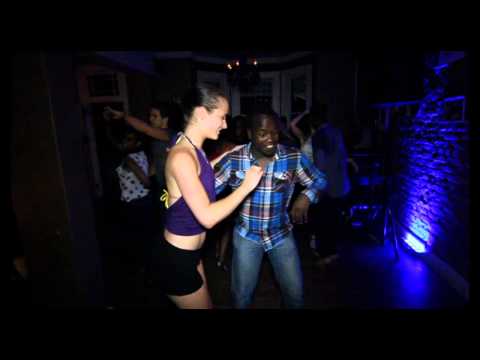
If you only train in controlled settings, you miss the conditions that define real social dancing: crowded lanes, variable partners, inconsistent floors, difficult songs, loud rooms, and pressure to keep a dance enjoyable even when things go wrong.
This article is not anti-lessons. Group classes and private coaching are valuable. The point is balance: technical instruction gives you tools, but social dancing teaches you when and how to use them.
The common trap: "I'm not ready for the club yet"
Many students postpone socials because they want to feel perfect first.
That feeling is understandable, but it creates a loop:
- You delay social dancing to avoid mistakes.
- You miss the exact environment where adaptation is learned.
- You return to lessons with the same weaknesses.
- You delay again.
Weeks become months. Months become years.
Meanwhile, dancers with fewer classes but regular social floor time often pass you quickly because they are training in the right conditions.
Why club experience is irreplaceable
In class, your instructor often compensates for your mistakes. In private lessons, the environment is built for your success.
At socials, you encounter reality:
- partners with different frame habits,
- leaders with different clarity levels,
- followers with different timing interpretations,
- and songs that demand immediate musical decisions.
You cannot pause the music and ask for a reset. You must communicate, adapt, and keep moving.
That is where confidence becomes real.
The driving analogy still applies
Learning salsa only through lessons is like learning to drive only by reading manuals and practicing on an empty test track. Useful? Yes. Sufficient? No.
Real driving includes traffic, weather, distractions, and unpredictability.
Real salsa includes:
- floorcraft in tight spaces,
- changing dance energy by song section,
- adjusting to different connection tones,
- and recovering gracefully from mistakes.
No textbook replaces that.
The 3-to-1 rule for private lesson students
A practical standard that works for most dancers:
For every 1 hour of private instruction, put in at least 3 hours of social floor application.
Why this works:
- You convert concepts into habits.
- You discover weak points quickly.
- You return to your coach with better questions.
- You stop paying repeatedly to re-explain fundamentals you never tested.
Think of private coaching as diagnosis and strategy. Think of socials as implementation.
What happens when dancers skip this ratio
Without enough social reps, dancers often:
- memorize combinations without understanding timing,
- look good in one partner context and struggle with everyone else,
- overthink during dances and lose musical connection,
- and become dependent on lesson structure.
This is why some students feel "busy" but not better.
Progress is not measured by how many classes you attend. Progress is measured by what you can execute comfortably with varied partners in real conditions.
Mistakes are not failure; they are the curriculum
At socials, mistakes are guaranteed.
That is the point.
If one move fails ten times and then starts working on attempt eleven, you are improving. If it fails for three nights and then stabilizes, you are improving. If you abandon every failed movement immediately, you never get past beginner anxiety.
The strongest social dancers have made thousands of visible mistakes. They just learned to recover quickly and keep partner comfort high.
A simple recovery strategy:
- Stay calm.
- Return to basics.
- Reconnect frame and rhythm.
- Continue dancing.
Partners usually remember how you made them feel, not whether every combo was perfect.
Club skill is a separate skill
Some dancers are excellent in class and average in socials. Others are average in class and excellent in socials. This happens because social dancing includes a different layer of intelligence:
- reading partner energy,
- selecting appropriate complexity,
- using floor space responsibly,
- and pacing intensity over a full song.
If your training ignores that layer, your ceiling stays low.
How to use group classes effectively
Group classes are great for exposure, repetition, and community. To maximize them:
- Pick one technical priority per month (timing, frame, turns, etc.).
- Avoid collecting endless random patterns.
- Practice one correction immediately at the next social.
- Keep notes on what fails under pressure.
Then return to class with intent, not just attendance.
How to use private lessons effectively
Private lessons are expensive and powerful when used correctly.
Best practices:
- Arrive with specific questions from social floor problems.
- Request one or two priority fixes, not ten.
- Ask for drills you can execute alone and with partners.
- Schedule enough time between lessons to apply corrections.
If your private schedule is weekly but social practice is minimal, you are probably overspending and under-learning.
Intimidation is normal, avoidance is costly
Everyone feels intimidated at times, especially in strong scenes.
Use these strategies to keep showing up:
- Start your night with partners you trust.
- Dance early before the room gets packed.
- Set one technical goal per song.
- Alternate challenge dances with comfortable dances.
- Leave with one clear win, even if small.
Confidence is not something you wait to "have." Confidence is what appears after repeated exposure.
What leaders should focus on at socials
Leaders often overestimate pattern variety and underestimate clarity.
At the club, prioritize:
- timing consistency,
- clean lead prep,
- safe slot management,
- and smooth transitions.
A clear basic with musical intention beats complicated confusion every time.
What followers should focus on at socials
Followers build social strength by sharpening:
- timing independence,
- balance through turns,
- frame responsiveness without rigidity,
- and musical expression between lead signals.
Followers who manage their own axis and timing adapt better across different lead styles.
Practical weekly plan for faster progress
Here is a realistic template for most working adults:
- 1 group class (technique focus)
- 1 private lesson every 2-4 weeks (targeted correction)
- 2 socials (application and adaptation)
- 2 short home drills (timing, footwork, body control)
This mix usually outperforms "many classes, little social dancing."
The long-term perspective
Salsa growth is not linear. Some weeks feel amazing; some feel frustrating. Social floor development has noise because each night presents different variables.
Do not evaluate progress by one difficult dance or one rough night.
Evaluate trends over 8-12 weeks:
- Are your basics more reliable?
- Are recoveries faster?
- Are partners more comfortable?
- Are you hearing music more clearly?
If yes, keep going.
Final takeaway
Lessons are valuable. Private coaching is valuable. Workshops are valuable.
But none of them replace social floor experience.
If you want to become a confident, musical, adaptable salsa dancer, you need both instruction and live application. Train in class, then test in the club. Learn in private, then verify in public. Study mechanics, then practice communication.
That is how technique becomes dancing.
If you keep one principle from this article, keep this one: learn in class, confirm in socials.
Real confidence is earned in live social conditions, not only in rehearsed settings.