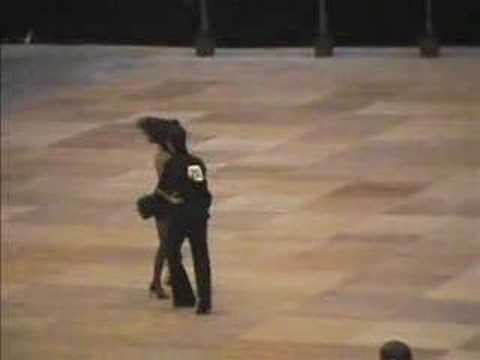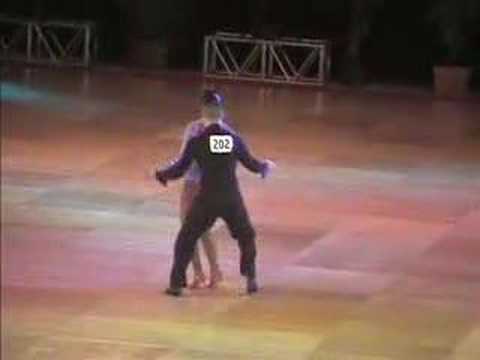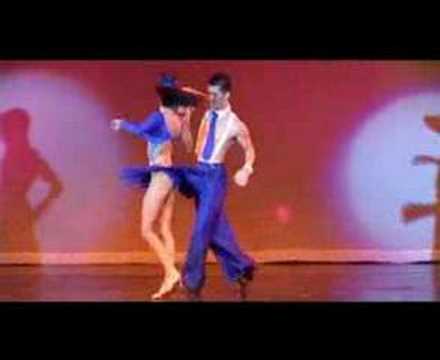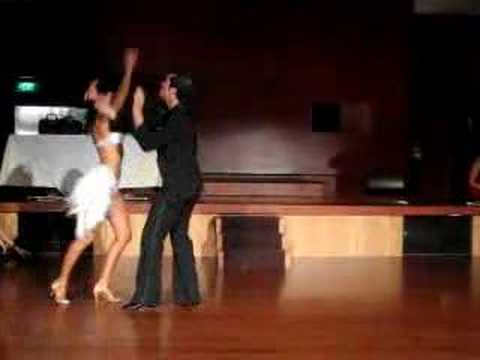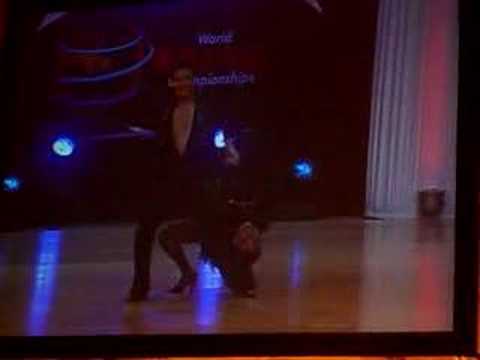
World Salsa Championships 2006 On2 Division: Junior & Emily vs Oliver & Luda
If you want to understand high-level On2 partnerwork, these two 2006 World Salsa Championships clips are still worth studying.
The excitement is obvious, but the real value is technical: how each couple solves speed, timing, and connection in different ways while staying musical.
Performance 1: Junior and Emily (2nd place)
Junior and Emily deliver one of the most explosive examples of fast rotational work in this era.
What stands out is not just "a lot of spins." It is the hand recovery timing between spins. You can see moments where contact is released, then re-established with precision while the follow is still in rotational momentum. That requires trust, clear lead timing, and disciplined axis control from both dancers.
Performance 2: Oliver Pineda and Luda Kroitor (1st place)
Oliver and Luda show a different kind of mastery: smoothness that can make very hard content look deceptively simple.
Their transitions feel seamless because the movement pathways are clean and compact. Instead of broadcasting effort, they reduce visible tension and let phrasing breathe. The result is polished and musical without sacrificing technical difficulty.
What makes these routines useful for social dancers
Most people will never dance a world-level choreography at that speed. You can still learn a lot from these clips.
Focus on three transferable lessons:
- Clean hand changes matter more than flashy pattern count.
- Timing clarity makes difficult movement look calm.
- Fast spins only look good if exits are controlled.
Try watching once for entertainment, then again with one technical lens at a time: frame quality, timing of turn preparation, or how each couple resolves transitions on phrase endings.
Why On2 discussions often miss the point
People love debating On1 vs On2, but these videos show something more important: elite dancers win through control, not timing politics.
Both couples are deeply musical, highly trained, and intentional. Their style differences are real, but their foundations are equally serious.
That is the practical takeaway for your own dancing. Build fundamentals first. Then timing choice becomes expression, not confusion.